












Sutras Introduction
Before reading the Sutras, the following information can help you understand what you are about to read and its importance.
Patanjali, an Indian Sage, is considered the Father of Yoga. His life and when he lived is still a mystery. Guesses suggest he may have lived between 2nd century BCE and the 5th century CE.
Although Patanjali is considered the Father of Yoga, his Sutras are not the oldest nor the only authoritative text on practicing yoga. But, his Sutras are regarded as some of the best or, at least, the most popular.
Purists will say that you must read his Sutra in the original Sanskrit to fully unlock the true mysteries of the mind and body. This might be true as Sanskit was a language created by the Mudra Yogis to fully utilize every sound that the human voice could make. Sanskrit has been said to be the perfect language. But the reality is, you and I can't read Sanskrit. Therefore, reading the Sutras in English or our Mother Tongue is the only other option.
His Yoga Sutras contain 196 aphorisms — that is — a concise statement that expresses a basic truth or principle for one to memorize. An aphorism often requires interpretation to fully understand its meaning — and in that lies its power — it forces the true aspirant to dive deep within one's SELF.
As you begin travel your yogic path, you will hear or see Patanjali's name more often. At first, you might not take note of Patanjali, but as you dive deeper into the pool of Yoga and ultimately dive deeper into the SELF, you begin to realize the foundational importance of his Sutras.
In his Sutras, Patanjali explains the Eight Limbs of Yoga — also referred to as Ashtanga Yoga.
Ethical and moral living is also taught in his Sutras and this includes Yama (restraint) and the Niyamas (five rules to follow).
- Saucha: Purity, cleanliness of body and mind.
- Santosha: Contentment, acceptance of circumstances.
- Tapas: Austerity, self–discipline, and perseverance.
- Svadhyaya: Self–study, reflection on sacred texts.
- Ishvara Pranidhana: Surrender to a higher power or divine will.
Patanjali wanted students to have a Sadhana — spiritual practice or discipline leading to an ultimate goal. This included the practice of Asana (poses), Pranayama (breathing), meditation and of course, the study of his Sutras. The purpose was to help one turn their attention inward (Pratyahara), create deep inner focus and concentration (Dharana) and ultimately get to the state of Samadhi — the highest state of meditation.
It's true that Patanjali said we might need more than one lifetime to get to the state of Samadhi, but as Swami Harinanda would say: There's no guarantee you got another lifetime. Samadhi must be obtained in this lifetime.
For some, like Ramana Marharshi, the only Sadhana needed was to answer the question Who am I? (go to the Jnana Yoga section to read this Sadhana).
Regardless of which Sadhana you follow, the teachings of Patanjali remain timeless.
In my humble opinion, Patanjali is still teaching or assisting the true aspirant. As a young 4 year old boy, I was practicing the Haung Sau (Ham Sa) — also known as Patanjali's Breath. How or who taught me this will never be known. Was it the Guru within or was it Patanjali himself — or — are they the same?
You can learn Patanjali's Breath. It's easy to do yet powerful.
Mission Impossible
While it would be nice of me to say that memorizing all of the Sutras is possible, that's probably not realistic for most — including myself.
So, of all the Sutras, there are 2 that are arguably the most important. Swami Harinanda would often quote these to aphorisms of Patanjali. As Swami Harinanda would say, this is all it comes down to and nothing else
:
And
Chitta Vritti Nirodhawhich means Complete and Total Annihilation of All Mental Fluctuations.
Abbyhasa of the Chitta Vrittiwhich means Restraint of All Mental Fluctuations.
Chitta Vritti Nirodha
is discussed in Book Ⅰ, Sutra 2.
Abbyhasa of the Chitta Vritti
is discussed in Book Ⅰ, Sutra 12.
Charles Johnston vs Swami Vivekananda
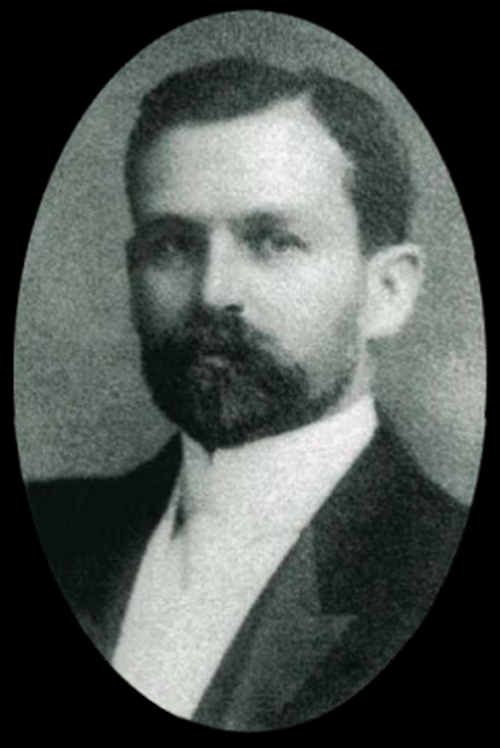 The book you are about to read is by Charles Johnston who wrote his book on Patanjali's Sutras in 1912.
Charles Johnston was an Irishman who worked for the Indian Civil Service. He was a Sanskrit scholar, writer, naturalist, journalist and theosophist.
In some ways, his interpretation of the Sutras is more difficult to understand than that of Swami Vivekananda. You can see his writing approach is different. And yet, within it, there are sparks that can light the fire to self–realization.
When I look at Book Ⅰ, Sutra 2 and 12, I see very different words when comparing the two books. But I enjoy both interpretations equally and while my natural tendency is to go with Swami Vivekananda, I found myself really enjoying that which Charles Johnston had to say.
So while understanding everything that Charles Johnston says or explains can be difficult, that is is not entirely a bad thing. His interpretation can help us think or question the Sutras from a different angle.
I encourage students to read both books on Patanjali's Sutras.
While it would be great if you could remember every Sutra, more than remembering the words, embrace the essence of the Sutras. In that way, you become the Sutras themselves.
The Four Books
Patanjali's Sutras are divided into four books or chapters — Samadhi, Sadhana, Vibhuti, and Kaivalya.
Realizing this or being aware of these 4 chapters helps you walk into the Sutras with the door already open.<.p>
- Each aphorism is specifically geared to make you obtain self–realization.
- These Sutras are the foundation of Ashanta Yoga also known as the Eight Limbs of Yoga .
- Moksha (liberation) is the ultimate goal and is referred to as Kaivalya in the book.
- Book Ⅰ, Sutra 2 and 12 are arguably the most important aphorisms to focus on:
Chitta Vritti Nirodha
which means Complete and Total Annihilation of All Mental Fluctuations .Abbyhasa of the Chitta Vritti
which means Restraint of All Mental Fluctuations.
In Sanskrit, Sutra means thread
and Pada means Chapter
.
Samadhi Pada
Samadhi Pada is the first chapter and meant to help prepare the foundation for what's to come.
There are 51 sutras that teach you the foundational truths, thoughts, obstacles to overcome, the importance of disciplined Abhyasa (practice), and Vairagya (detachment).
Sadhana Pada
In this Pada you are introduced to the Yamas and the Eight–Limbed System (Ashtanga Yoga.
The principles of Ashtanga yoga, Kriya yoga, and Karma are outlined in this Pada. There is a focus on the first six limbs of Eight–Limbed System.
- Yamas: ethic rules, restraints or standards.
- Niyamas: See above to read the 5 rules to follow.
- Asana: Hatha Yoga or postures.
- Pranayama: breathing techniques.
- Pratyahara: withdrawal of senses.
- Dharana: concentration.
Vibhuti Pada
This third Pada focused on the last two limbs:
- Dhyana: profound meditation.
- Samadhi: the highest state meditation — ecstasy.
Kaivalya Pada
This final Pada reviews what has been achieved thus far which in turn prepares you for liberation (Moksha).
Moksha is not only the grand finale of the Sutras, but where you will find absolute silence.
Like Borobudur, the ancient Buddhist temple in Indonesia, where at the base of the temple there are many engraving in the stone that tell stories and lessons, with each new level saying less and less until you finally get to the top where nothing is said at all. Silence. Enlightenment. End of story.
… and as a friendly reminder, none of this would be needed if you would just Wake Up!
— Yogi Karmananda

Chapters
| Patanjali Sutras: Introductionvivekananda Samadhi Pada Sadhana Pada Vibhuti Pada Kaivalya Pada sutras borobudur aphorisms Father of Yoga mudra yogis sanskrit Eight Limbs of Yoga ashtanga yoga Saucha Purity Santosha Tapas Svadhyaya Ishvara Pranidhan Sadhana ramana maharshi who am i Patanjali's Breath Haung Sau Ham Sa Samadhi Pada Sadhana Pada Yamas Niyamas Asana Hatha Yoga Pranayama Pratyahara Dharana Vibhuti Pada Dhyana Kaivalya Pada borobudur discipline |
| Patanjali Sutras: Book ⅠUnion scriptures divine conscious god sin immortal pyschic soiritual egotism passion sexual desire matrix physical the man is wise dreams sleep slept well earth enemies sensual lust meditation the cloud of things knowable paradise oversoul master om aum eternal spiritual consciousness sickness inertia doubt lightmindedness laziness intemperance sickness false notions grieving grief sympathy compassion gloom dreams love wisdom sir isaac newton cow painter author commentator scriptures saint |
| Patanjali Sutras: Book ⅠⅠcommandments Decalogue aspiration obedience hindrances lust hate darkness ambition psychic Shakespeare attachment sankhya samkhya taste pain hate renunciation attachment love karma prisoner king vendanta meditation buddhist commandments sins holy ghost breaths breathing poise posture discipline |
| Patanjali Sutras: Book ⅠⅠⅠspiritual powers Commandments dharana Sir Isaac Newton attention dhyana samadhi sanyama concentrated meditation darwin Fraunhofer spectroscope fencer musician elephant comet chrysalis caterpillar angel shankara elephant astronomy astronomer sun moon mansions Taittiriya Upanishad indra immaculate conception intuition divination illumination upward life levitation walk on water Katha Upanishad telepathy divine hearing |
| Patanjali Sutras: Book IVcosmic law Psychic drugs incantations Meditation affirmations field corn jealousy heaven karma prayer desires lust lovers liberation ether emerson swedish philosopher bjorklund heaven archangel immortality salvation vendanta indian teachings samsara circle of necessity Vedantins |
The Real Yoga
website is designed to be a self–study website. But, feel free
to send us a message — but do make sure your email is correct.