















 Index9 YogasYogaReal YogaGreat YogisWhy Yoga?What Is Yoga?YantraWordThe PortalWhoConsciousnessKarmaMeditationHealthSicknessSattwicDietFoodSpiritMotivationsKriya YogaSnowflakesWaterMindNo–MindGeneticsYogAurasCuriousityEasterAumFieldMounaReincarnationKashmirCultsLyingPlantsVegGuruChantAtralTerminologyMIlkTips
Milk: Natural?
Even though this article has nothing to do with Yoga specifically, the Swami wrote this article because he was well studied in many aspects of life and living.
While the Swami wanted people to know this information about milk, this information didn't stop the Swami from enjoying his favourite food — ice cream.
At the end of the day, it all comes down to balance. Even the great Dr. Bernard Jensen who wrote many books including, but not limited to,
Foods That Heal, was known for enjoying a doughnut. To individuals like Dr. Bernard Jensen and the Swami, to deny one of a treat was worse than the treat itself.
All things are poison, and nothing is without poison; the dosage alone makes it so a thing is not a poison.— Paracelsus, 1538The difference between poison and medicine is in the dose. Even water can be poisonous at a certain point.
So this article, while not specifically about Yoga, can help one be more Sattwic but also more balanced and adaptable in thought. When we realize not everything is healthy, yet when we are not so rigid, we can enjoy that doughnut or ice cream.
Like bamboo blowing in the wind, we bend but we don't break. And in the end, just like bamboo, we rebound back to our original position. Be like bamboo. Be flexible in thought until you have no thoughts at all.
Dairy products are considered a dietary staple by many, yet they are neither a necessary nor a desirable part of a healthy human diet. For those who wish to avoid meat for ethical and/or health reasons, dairy products are a poor substitute.
Whole cow's milk is suited to the nutritional needs of calves who, unlike human babies, double their weight in 47 days (as opposed to 180 for humans), grow four healthy stomachs, and weigh 300 pounds within a year. Cow's milk contains about three times as much protein as human milk and almost 50 percent more fat. Despite the clever advertising of the dairy industry, it is not natural
for humans to drink cow's milk. No other species drinks milk beyond infancy, and no other species drinks the milk of another species (except domestic cats and dogs, who are taught the habit). After four years of age, most
people develop lactose intolerance, the inability to digest the carbohydrate lactose (found in milk), because they no longer synthesize the digestive enzyme lactase. Consuming dairy products after early childhood can cause diarrhea, gas, and cramps.(1)
Liquid Meat:
In addition to being an unnatural food for humans, cow's milk, like other dairy products, is unhealthful. John A. McDougall, M.D., calls dairy foods liquid meat
because their nutritional contents are so similar. Rich in fat and cholesterol, dairy products, including cheese, milk, butter, cream, yogurt, and whey (found in many margarine and commercial baked goods), contribute to the development of heart disease, certain cancers, and stroke — our nation's three deadliest killers — and even osteoporosis, as studies have repeatedly shown.
Osteoporosis is bone loss due to calcium resorption, which, contrary to the protestations of the dairy industry, is not halted or prevented by an increase in the intake of calcium so much as by a drop in protein consumption. High protein foods, such as meat, eggs, and dairy products, leach calcium from the body as excess protein is processed by the liver and passed through the kidneys, making the kidneys work harder and causing the loss of minerals such as calcium.(2) Societies with little or no consumption of dairy foods and animal proteins show low incidences of osteoporosis. Furthermore, Dr. McDougall notes, Calcium deficiency caused by an insufficient amount of calcium in the diet is not known to occur in humans.
(3)
Other illnesses are more prevalent among those who consume significant amounts of dairy products than among vegans. Ninety percent of asthma patients who were put on a completely vegetarian diet (without meat, eggs, or dairy products) experienced great improvements in the frequency and severity of their attacks.(4) Dairy products are also the leading cause of food allergies and have been implicated in congestive heart failure, neonatal tetany, tonsil enlargement, ulcerative colitis, Hodgkin's disease, and respiratory, skin, gastrointestinal, and behavioral problems.(5)
It's a Cow's Life:
At least half of the 10 million cows kept for milk in the United States live on factory farms, in conditions that cause tremendous suffering to the animals. They do not spend hours grazing in fields but live crowded into concrete floored milking pens or barns, where they are milked two or three times a day by machines.
Milking machines often cause cuts and injuries that would not occur were a person does the milking. These injuries abet the development of mastitis, a bacterial infection common to the dairy industry. In a handbook for dairy farmers, a photo caption warns that Increasing severity of mastitis results in progressive deterioration of milk quality,
causing losses of at least half a billion dollars per year.(6) More than 20 different types of bacteria cause the infection, which is easily spread from one cow to another and which, if left unchecked, can cause death.
In some cases, milking machines give cows repeated electrical shocks, causing them considerable discomfort, fear, and impairment of their immune systems, sometimes leading to death. A single farm can lose several hundred cows to uncontrolled electric shocking.(7) However, milking machines are used anyway, because they save labor, enabling a single farm worker to milk 86 cows in two hours.(8)
The number of cows raised for milk dropped from almost 22 million in 1950 to 10.8 million in 1980, yet the amount of milk produced rose from 116 billion pounds to 128 billion.(9) As a result, the average cow of the 1980's produced about twice as much milk as her counterpart of the 1950's. To produce 24 quarts of milk per day, cows are fed more than 81 pounds of food (including grain, hay, and silage — corn, sorghum, grass, and legumes) plus 45 gallons of water every day.(10) In 1983 the U.S. government stored 17 billion pounds of surplus milk equivalent
(milk, cheese, and butter), at a cost to taxpayers
of $2.5 billion for 1983.(11) Efforts to prevent farms from going under have cost the U.S. government more than a billion dollars a year in price support programs.(12)
Cows of the 1990's live only about four to five years, as opposed to the life expectancy of 20 — 25 years enjoyed by cows of an earlier era. To keep the animals at high levels of productivity, dairy farmers keep them pregnant constantly through the use of artificial insemination. Farmers also use an array of drugs, including bovine growth hormone (BGH); prostaglandin, which is used to bring a cow into heat whenever the farmer wants to have her inseminated; antibiotics; and even tranquilizers, to influence the productivity and behavior of the cows.
About 15% of dairy cows are routinely injected with BGH(13), which increases milk production by up to 20 percent, causing cows' udders to become so heavy and swollen that they can drag along the ground. A full udder can weigh 60 pounds and hold 50 pounds of milk. (14) The cows' accidental stepping on their udders causes the teats to become injured and infected, resulting in mastitis. Fortunately, responding to pressure by groups representing animal rights, consumer protection, small farms, and environmental interests, five of the largest supermarket companies in the United States have asked their suppliers not to ship them milk from cows given the drug.(15) BGH aggravates lameness, because it causes cows to become so heavy. Cement flooring and the high–energy diet also contribute to the problems.
What Happens to the Calf?
Perhaps the greatest pain suffered by cows of the dairy industry is the repeated loss of their young. Female offspring may join the ranks of the milk producers, but the males are generally taken from their mothers within 24 hours of birth, before they have drunk any of their mothers' milk, and sold at auction either for the notorious veal industry or to beef producers. If the calf is killed when young, his fourth stomach is also used in cheese making; it contains rennin, an enzyme used to curdle (or coagulate) milk to turn it into cheese.
Rennet, the membrane of which rennin is an extract, can also be used in this process. It is possible to make rennetless cheese (available at health food stores), but the close connection between the dairy, veal, and leather industries makes it cheaper for cheese producers to use calf parts than a vegetable–derived enzyme.
Within 60 days the cow will be impregnated again. If a cow hasn't dried up just before calving, farmers often give her a few days' rest. Some feel that a month or so rest period is valuable but others see that as a waste of time.
(16) For about seven months of her next nine month pregnancy, she will continue to be milked for the fluid meant for her older calf. A typical factory farmed dairy cow will give birth three or four times in her short life. When her milk production wanes, she is sent to slaughter, most likely to be ground up into fast food burgers.(17)
Alternatives:
Try rice or soy milks instead.
For calcium supplement alternatives, consider eating tahini. Tahini is made from ground sesame seeds and is the sesame seed alternative to peanut butter.
Another calcium alternative is seaweed. Not only does seaweed contain calcium, but other important nutrients like iodine which helps to regulate the thyroid.
Skim milk is known to have about 121 mg of calcium per 100 grams.
Sesame seeds are know to have about 1,160 mg of calcium per 100 grams.
Seaweed is know to have about 1,093 mg of calcium per 100 grams.
Clearly, a small amount of Tahini or seaweed will go a long way to providing more calcium in a healthier form than milk.
References:
- McDougall, John A., M.D., and Mary A. McDougall, The McDougall Plan, New Century Publishers, Inc., pp. 49–51.
- McDougall, op.cit., p. 100.
- McDougall, op.cit., p. 52.
- Robbins, John, Diet for a New America, Stillpoint Publishing, 1987, p. 300.
- 5.McDougall, op.cit., pp. 49–50.
- USDA Farmers Bulletin No. 2253, 1973.
- Anderson, Jack, and Dale Van Atta,
Stray Voltage Killing U.S. Dairy Cows,
The Washington Post, Aug. 9, 1989.
- USDA,
People on the Farm: Dairying,
1981, p.1. - Ibid, p.4.
Dairy Cow Is Nature's Milk Factory,
Bristol Herald Courier, July 21, 1983.- Time, Nov. 21, 1983.
Dairyman's Pail Runneth Over,
Insight, Dec. 7, 1987.Business Bulletin,
The Wall Street Journal, March 16, 1995, p. A1.Dairy Cow Is Nature's Milk Factory,
op.cit.- Day, Kathleen,
Dairy, Consumer Groups Udderly at Odds on Cow Hormone,
The Washington Post, May 2, 1995, p. D1. - Dairying, op.cit., p. 3.
- Mason, Jim,
And a Cow Jumped Over the Moon,
Animals' Voice, Feb. 1989, p. 46.
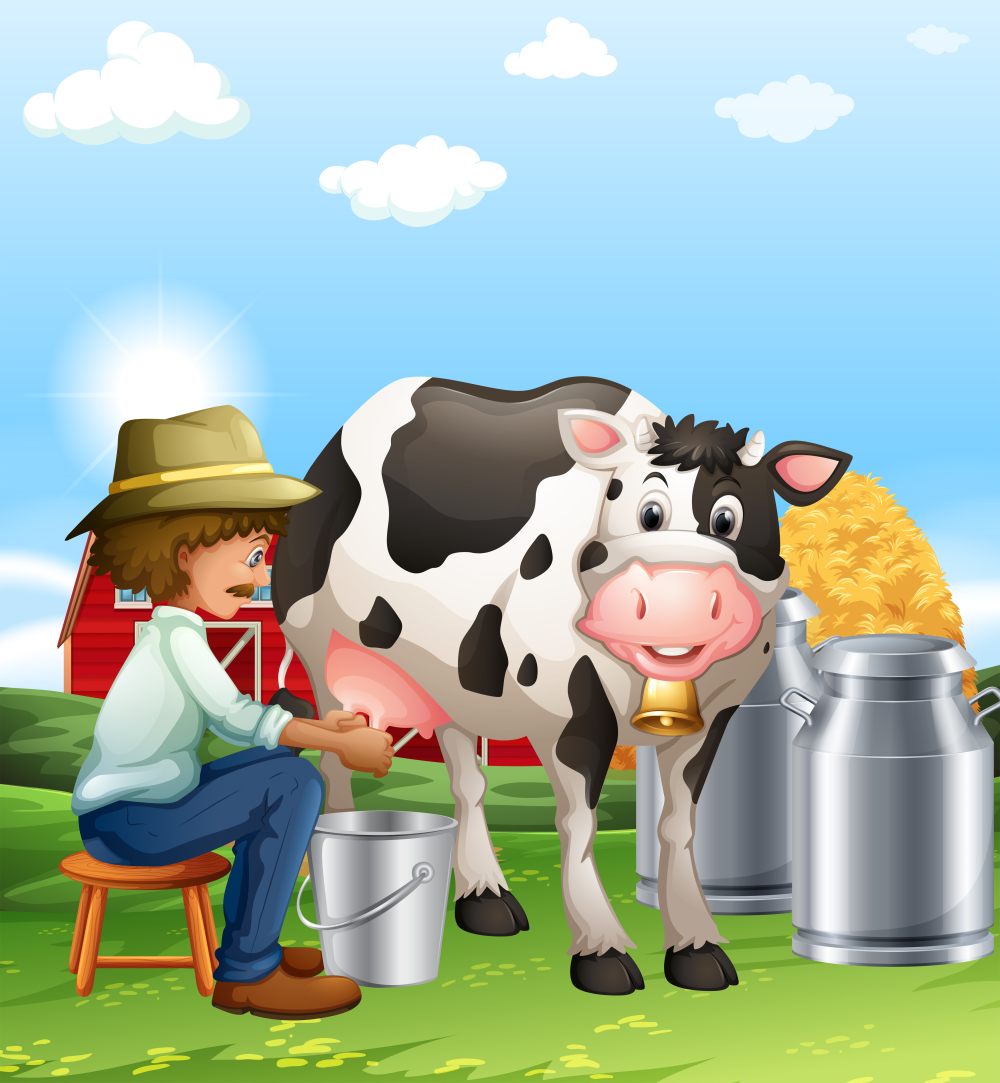
EE–I–EE–I–O,
And on that farm he had a cow, EE–I–EE–I–O,
With a moo, moo, here, a moo, moo there,
Here a moo, there a moo, everywhere a moo, moo,
Old MacDonald had a farm, EE–I–EE–I–O,
License
Articles by Swami Harinanda and Yogi Karmananda are © 2026 and are licensed under CC BY-NC-ND 4.0


Most images do not qualify for use under this license. The 9 Planes of Reality
image is, however our own
image and thus qualifies.
Some images are used under a Creative Commons License and can also be used as long as you follow their license agreement.
Music has been used with permission and may be used if you qualify and abide by the licensing requirements.
Send Message
The Real Yoga
website is designed to be a self–study website. But, feel free
to send us a message — but do make sure your email is correct.
Respecting Your Privacy
No spying. No cookies. No Google. No advertising. No tracking. No joking — well, maybe a few jokes.
Say yes to 100% free! Two thumbs up!










Index9 YogasYogaReal YogaGreat YogisWhy Yoga?What Is Yoga?YantraWordThe PortalWhoConsciousnessKarmaMeditationHealthSicknessSattwicDietFoodSpiritMotivationsKriya YogaSnowflakesWaterMindNo–MindGeneticsYogAurasCuriousityEasterAumFieldMounaReincarnationKashmirCultsLyingPlantsVegGuruChantAtralTerminologyMIlkTipsYou Are Already Perfect