










Chapter 7
Hatha Yoga
Or The Yogi Philosophy Of Physical Well–Being
by Yogi Ramacharaka (1904).
Yogi Ramacharaka wrote more than 100 books in the last 30 years of his life. He shared pure, sincere and
genuine knowledge. This is Real Yoga
.
How many things mentioned in this book do you do intuitively? A pure 1, that is, a person with a 1 soul and a balanced name, is more likely to be intuitively following the lessons within this book.
This book was originally published in 1904 and thus is in the public domain.
The Crematory Of The System
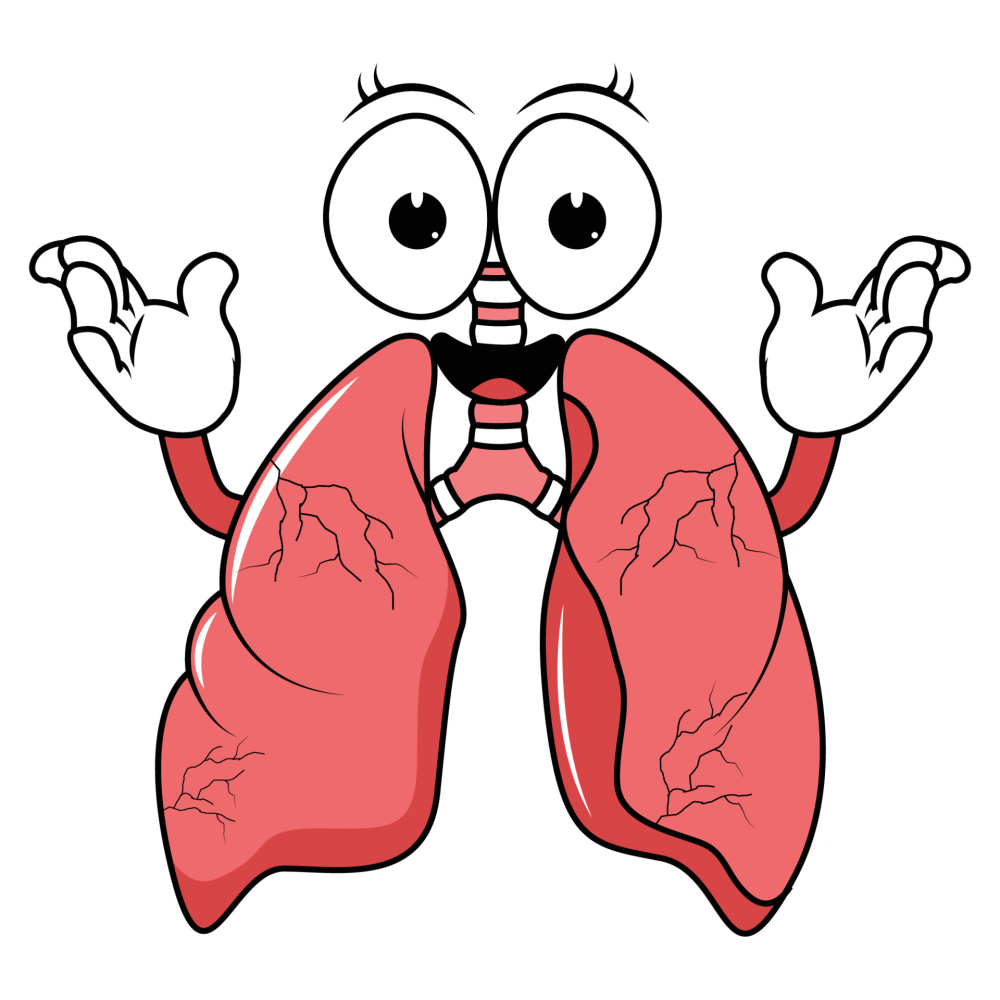
The Organs of Respiration consist of the lungs and the air passages leading to them. The lungs are two in number, and occupy the pleural chamber of the thorax, one on each side of the median line, being separated from each other by the heart, the greater blood vessels and the larger air tubes. Each lung is free in all directions, except at the root, which consists chiefly of the bronchi, arteries and veins connecting the lungs with the trachea and heart. The lungs are spongy and porous, and their tissues are very elastic. They are covered with a delicately constructed but strong sac, known as the pleural sac, one wall of which closely adheres to the lung, and the other to the inner wall of the chest, and which secretes a fluid which allows the inner surfaces of the walls to glide easily upon each other in the act of breathing.
The Air Passages consist of the interior of the nose, pharynx, larynx, windpipe or trachea, and the bronchial tubes. When we breathe, we draw in the air through the nose, in which it is warmed by contact with the mucous membrane, which is richly supplied with blood, and after it has passed through the pharynx and larynx it passes into the trachea or windpipe, which subdivides into numerous tubes called the bronchial tubes (bronchia), which, in turn, subdivide into and terminate in minute subdivisions in all the small air spaces in the lungs, of which the lungs contain millions. A writer has stated that if the air cells of the lungs were spread out over an unbroken surface, they would cover an area of fourteen thousand square feet.
The air is drawn into the lungs by the action of the diaphragm, a great, strong, flat, sheet–like muscle, stretched across the chest, separating the chest–box from the abdomen. The diaphragm's action is almost as automatic as that of the heart, although it may be transformed into a semi–voluntary muscle by an effort of the will. When it expands, it increases the size of the chest and lungs, and the air rushes into the vacuum thus created. When it relaxes the chest and lungs contract and the air is expelled from the lungs.
Now, before considering what happens to the air in the lungs, let us look a little into the matter of the circulation of the blood. The blood, as you know, is driven by the heart, through the arteries, into the capillaries, thus reaching every part of the body, which it vitalizes, nourishes and strengthens. It then returns by means of the capillaries by another route, the veins, to the heart, from whence it is drawn to the lungs.
The blood starts on its arterial journey, bright red and rich, laden with life–giving qualities and properties. It returns by the venous route, poor, blue and dull, being laden down with the waste matter of the system. It goes out like a fresh stream from the mountains; it returns as a stream of sewer water. This foul stream goes to the right auricle of the heart. When this auricle becomes filled, it contracts and forces the stream of blood through an opening in the right ventricle of the heart, which in turn sends it on to the lungs, where it is distributed by millions of hair–like blood vessels to the air cells of the lungs, of which we have spoken. Now, let us take up the story of the lungs at this point.
The foul stream of blood is now distributed among the millions of tiny air cells in the lungs. A breath of air is inhaled and the oxygen of the air comes in contact with the impure blood through the thin walls of the hair–like blood vessels of the lungs, which walls are thick enough to hold the blood, but thin enough to admit the oxygen to penetrate them. When the oxygen comes in contact with the blood, a form of combustion takes place, and the blood takes up oxygen and releases carbonic acid gas generated from the waste products and poisonous matter which has been gathered up by the blood from all parts of the system. The blood thus purified and oxygenated is carried back to the heart, again rich, red and bright, and laden with life–giving properties and qualities. Upon reaching the left auricle of the heart, it is forced into the left ventricle, from whence it is again forced out through the arteries on its mission of life to all parts of the system. It is estimated that in a single day of twenty four hours, 35,000 pints of blood traverse the capillaries of the lungs, the blood corpuscles passing in single file and being exposed to the oxygen of the air on both of their surfaces. When one considers the minute details of the process alluded to, he is lost in wonder and admiration at Nature's infinite care and intelligence.
It will be seen that unless fresh air in sufficient quantities reaches the lungs, the foul stream of venous blood cannot be purified, and consequently not only is the body thus robbed of nourishment, but the waste products which should have been destroyed are returned to the circulation and poison the system, and death ensues. Impure air acts in the same way, only in a lessened degree. It will also be seen that if one does not breathe in a sufficient quantity of air, the work of the blood cannot go on properly, and the result is that the body is insufficiently nourished and disease ensues, or a state of imperfect health is experienced. The blood of one who breathes improperly is, of course, of a bluish, dark color, lacking the rich redness of pure arterial blood. This often shows itself in a poor complexion. Proper breathing, and a consequent good circulation, results in a clear, bright complexion.
A little reflection will show the vital importance of Correct breathing. If the blood is not fully purified by the regenerative process of the lungs, it returns to the arteries in an abnormal state, insufficiently purified and imperfectly cleansed of the impurities which it took up on its return journey. These impurities if returned to the system will certainly manifest in some form of disease, either in a form of blood disease or some disease resulting from impaired functioning of some insufficiently nourished organ or tissue.
The blood, when properly exposed to the air in the lungs, not only has its impurities consumed, and parts with its noxious carbonic acid gas, but it also takes up and absorbs a certain quantity of oxygen which it carries to all parts of the body, where it is needed in order that Nature may perform her processes properly. When the oxygen comes in contact with the blood, it unites with the hemoglobin of the blood and is carried to every cell, tissue, muscle and organ, which it invigorates and strengthens, replacing the worn out cells and tissue by new materials which Nature converts to her use. Arterial blood, properly exposed to the air, contains about 25 per cent of free oxygen.
Not only is every part vitalized by the Oxygen, hut the act of digestion depends materially upon a certain amount of Oxygenation of the food, and this is only accomplished by the oxygen in the blood coming in contact with the food and producing a certain form of combustion. It is therefore necessary that a proper supply of oxygen be taken through the lungs. This accounts for the fact that weak lungs and poor digestion are so often found together. To grasp the full significance of this statement, one must remember that the entire body receives nourishment from the food assimilated, and that imperfect assimilation always means an imperfectly nourished body. Even the lungs themselves depend upon the same source for nourishment, and if through imperfect breathing the assimilation becomes imperfect, and the lungs in turn become weakened, they are rendered still able to perform their work properly and so in turn the body becomes further weakened. Every particle of food and drink must be oxygenated before it can yield us the proper nourishment, and before the waste products of the system can be reduced to the proper condition to he eliminated from the system. Lack of sufficient Oxygen means imperfect nutrition, imperfect exhumation and imperfect health. Verily, breath is life
.
The combustion arising from the change in the waste products generates heat and equalizes the temperature of the body. Good breathers are not apt to take cold
, and they generally have plenty of good warm blood which enables them to resist the changes in the outer temperature.
In addition to the above–mentioned important processes, the act of breathing gives exercise to the internal organs and muscles, which feature is generally overlooked by the Western writers on the subject, but which the Yogis fully appreciate.
In imperfect or shallow breathing, only a portion of the lung cells are brought into play, and a great portion of the lung capacity is lost, the system suffering in proportion to the amount of under–oxygenation. The lower animals, in their native state, breathe naturally, and primitive man undoubtedly did the same. The abnormal manner of living adopted by civilized man— the shadow that follows upon civilization— has robbed us of our natural habit of breathing, and the race has greatly suffered thereby. Man's only physical salvation is to get back to Nature
.
Chapters
| Theory Chapter 1: What is Hatha Yoga?fakir raja karma gnana gnani jnana jnani chapter 1 |
| Theory Chapter 2: The Yogis' Regard For The Physical Bodyego conscientiously exercise western |
| Theory Chapter 3: The Work Of The Divine Architect |
| Theory Chapter 4: Our Friend, The Vital Forceprana chi |
| Theory Chapter 5: The Laboratory Of The Bodyteeth tongue saliva glands digestion stomach small intestine Pyloric Valve Pyloric Orifice gastric juice pesin fermentation yeast putrefy dyspepsia villi bile liver pancreatic juice Mastication insalivation deglutition intestinal digestion absorption circulation assimilation chyme Peptone Chyle heart glycogen kidneys urea waste ureters bladder pelvis urine headache poison |
| Theory Chapter 6: The Life Fluidblood nutrition digestion circulation heart capillaries intestinal villi veins lungs lymphatic system chyle brain impurities |
| Theory Chapter 7: The Crematory Of The Systemlungs thorax respiratory heart blood bronchi arteries breathe breathing nose pharynx larynx windpipe trachea chest diaphragm oxygen hemoglobin bronchial tubes |
| Theory Chapter 8: Nourishmentnourishment food |
| Theory Chapter 9: Hunger vs. Appetitenarcotics drugs tobacco wealthy people who were shipwrecked craving starvation alcohol whiskey |
| Theory Chapter 10: The Yogi Theory And Practice Of Prana Absorption From FoodHorace Fletcher American writer magnetism magnetic food eating |
| Theory Chapter 11: About Food |
| Theory Chapter 12: The Irrigation Of The Bodywater sweat perspiration skin kidneys lungs urine constipation colon large intestines small intestines saliva bowels bile colon prana pancreatic juice gastric juices |
| Theory Chapter 13: The Ashes Of The Systemcolon constipation small intestines appendix appendicitis Sigmoid Flexure fecal matter dyspepsia biliousness liver troubles kidney troubles |
| Theory Chapter 14: Yogi Breathingpranayama triple breath Complete Breath |
| Theory Chapter 15: Effects Of Correct Breathingpranayama triple breath Complete Breath |
| Theory Chapter 16: Breathing Exercisespranayama cleansing breath Yogi Nerve Vitalizing Exercise Yogi Vocal Breath The Retained Breath Lung Cell Stimulation Rib Stretching Chest Expansion Walking Exercise Morning Exercise Stimulating Circulation lungs muscles ligaments air cells |
| Theory Chapter 17: Nostril Breathing vs. Mouth Breathingpranayama nose |
| Theory Chapter 18: The Little Lives Of The Bodyboils pimples cells red blood red-blood gastric juice saliva pancreatic juices bile wound healing Instinctive Mind prana |
| Theory Chapter 19: The Control Of The Involuntary Systemprana colon heart liver cold feet menstruation circulation |
| Theory Chapter 20: Pranic Energyprana esoteric exoteric Nervous System Cerebro Spinal System Sympathetic System Medulla Oblongata brain mind Ganglia solar plexus Abdominal Brain manipua third chakra 3rd chakra |
| Theory Chapter 21: Pranic ExercisesPrana Generating Changing The Circulation Recharging Brain Stimulation Yogi Grand Psychic Breath heart Rhythmic Breathing grand breath |
| Theory Chapter 22: The Science Of Relaxationprana muscles instinctive mind cat panther |
| Theory Chapter 23: Rules For Relaxationprana muscles nerves anger worry anxiety stress fear smile smiling calmness stretching poses postures asanas healing health |
| Theory Chapter 24: The Use Of Physical Exerciseprana mental |
| Theory Chapter 25: The Use Of Physical Exercisefat muscles stomach shoulders arms legs back thighs abdomen |
| Theory Chapter 26: The Yogi Bathperspiration japanese pores skin waste sweat kidneys bacteria germs foot bath sleep prana Exercise To Reduce The Abdomen flat stomach standing walking posture slouching |
| Theory Chapter 27: The Solar Energyprana sunbath sun bath planets vitality morning sun |
| Theory Chapter 28: Fresh Airprana lungs kidneys colon bowels skin sleep |
| Theory Chapter 29: Sleepfresh air relaxation |
| Theory Chapter 30: Regenerationprana sex solar plexus kama sutra |
| Theory Chapter 31: The Mental Attitudecheerful happy happiness gloom worry fear hate jealousy anger depressing depression anxiety poison water mothers milk negative thinking positive thinking grief diabetes cancer grief jaundice insanity idiocy paralysis jaundice premature greyness baldness decay of the teeth uterine troubles erysipelas eczema impetigo contagious diseases bright cheerful happy calmness peace strength absolute fearlessness stop and smell the roses |
| Theory Chapter 32: Lead By The Spiritinstinct intuition |
| Hatha Yoga Todayvaccines health geo-engineering climate change holistic health natural health wifi emf celtic salt circadian rhythm |
The Real Yoga
website is designed to be a self–study website. But, feel free
to send us a message — but do make sure your email is correct.