









 IndexIntroPosesChairSimple 1Simple 2Simple 3Simple 4Simple 5Simple 6Simple 7Simple 8BasicLesson #1Lesson #2Lesson #3Lesson #4Lesson #5Theory 1Theory 2Theory 3Theory 4Theory 5Theory 6Theory 7Theory 8Theory 9Theory 10Theory 11Theory 12Theory 13Theory 14Theory 15Theory 16Theory 17Theory 18Theory 19Theory 20Theory 21Theory 22Theory 23Theory 24Theory 25Theory 26Theory 27Theory 28Theory 29Theory 30Theory 31Theory 32Theory 33
Chapter 22
Hatha Yoga
Or The Yogi Philosophy Of Physical Well–Being
by Yogi Ramacharaka (1904).
Yogi Ramacharaka wrote more than 100 books in the last 30 years of his life. He shared pure, sincere and
genuine knowledge. This is Real Yoga
.
How many things mentioned in this book do you do intuitively? A pure 1, that is, a person with a 1 soul and a balanced name, is more likely to be intuitively following the lessons within this book.
This book was originally published in 1904 and thus is in the public domain.
The Science Of Relaxation
The Science of Relaxation forms a very important part of the Hatha Yoga philosophy and many of the Yogis have devoted much care and study to this branch of the subject. At first glance it may appear to the average reader that the idea of teaching people how to relax— how to rest— is ridiculous, as every one should know how to perform this simple feat. And the average man is right— in part. Nature teaches us how to relax and rest to perfection— the infant is a past–master in the science. But as we have grown older we have acquired many artificial habits and have allowed Nature's original habits to lapse. And so at the present time the people of the Western world may well accept from the Yogis a little teaching along the lines of this subject.
The average physician could give some very interesting testimony on the subject of the failure of the people to understand the first principles of relaxation— he knows that a large percentage of the nervous troubles of the people are due to ignorance of the subject of rest
.
Rest and relaxation are very different things from loafing
, laziness
, [sic] etc. On the contrary, those who have mastered the science of relaxation are usually the most active and energetic kind of people, but they waste no energy; with them every motion counts.
Let us consider the question of relaxation and try to see just what it means. In order to better comprehend it let us first consider its opposite— contraction. When we wish to contract a muscle, in order that we may perform some action, we send an impulse from the brain to the muscle, an extra supply of Prana being conveyed to it, and the muscle contracts. The Prana travels over the motor nerves, reaches the muscle and causes it to draw its ends together and to thus exert a pull upon the limb or part which we wish to move, bringing it into action. If we wish to dip our pen into the inkwell, our desire manifests into action by our brain sending a current of Prana to certain muscle— in our right arm, hand and fingers, and the muscles, contracting in turn, carry our pen to the inkwell, dip it in, and bring it back to our paper. And so with every act of the body, conscious or unconscious. In the conscious act the conscious faculties send a message to the Instinctive Mind, which immediately obeys the order by sending the current of Prana to the desired part. In the unconscious movement the Instinctive Mind does not wait for orders, but attends to the whole work itself, both the ordering and the executing. But every action, conscious or unconscious, uses up a certain amount of Prana, and if the amount so used is in excess of the amount which the system has been in the habit of storing the result is that one becomes weakened and generally used up
. The fatigue of a particular muscle is somewhat different, and results from the unaccustomed work it has been called upon to perform, because of the unusual amount of Prana which has been directed toward contracting it.
We have spoken so far only of the actual movements of the body, resulting from muscular contraction, proceeding from the current of prana directed to the muscle. There is another form of the using up of prana and the consequent wear and tear upon the muscles, which is not so familiar to the minds of most of us. Those of our students who live in the cities will recognize our meaning when we compare the waste of prana to the waste of water occasioned by the failure to turn off the faucet in the washbowl and the resulting trickling away of the water hour after hour. Well, this is just what many of us are doing all the time— we are allowing our prana to trickle away in a constant stream, with a consequent wear and tear upon our muscles, and, indeed, upon the whole system, from the brain down.
Our students are doubtless familiar with the axiom of psychology, Thought takes form in action.
Our first impulse when we wish to do a thing is to make the muscular movement necessary to the accomplishment of the action proceeding from the thought. But we may be restrained from making the movement by another thought, which shows us the desirability of repressing the action. We may be inflamed with anger and may experience a desire to strike the person causing the anger. The thought is scarcely formed in our mind before the first steps toward striking are taken. But before the muscle fairly moves our better judgment causes us to send a repressing impulse (all this in the fraction of a second), and the opposite set of muscles holds back the action of the first set. The double action, ordering and countermanding, is performed so quickly that the mind cannot grasp any sense of motion, but nevertheless the muscle had begun to quiver with the striking impulse by the time the restraining impulse operated the opposing set of muscles and held back the movement.
This same principle, carried to still further refinements, causes a slight current of prana to the muscle, and a consequent slight muscular contraction, to follow many unrestrained thoughts, with a constant waste of prana and a perpetual wear and tear upon the nervous system and muscles. Many people of an excitable; irritable, emotional habit of mind constantly keep their nerves in action and their muscles tense by unrestrained and uncontrolled mental states. Thoughts take form in action, and a person of the temperament and habits just described is constantly allowing his thoughts to manifest in the currents sent to the muscles and the countermanding current immediately following. On the contrary, the person who has naturally, or has cultivated, a calm, controlled mind, will have no such impulses with their accompanying results. He moves along well poised and well in hand, and does not allow his thoughts to run away with him. He is a Master, not a slave.
The custom of this attempt of the excitable thoughts to take form in action, and their repressing, often grows into a regular habit— becomes chronic— and the nerves and muscles of the person so afflicted are constantly under a strain, the result being that there is a constant drain upon the vitality, or prana, of the entire system. Such people usually have a number of their muscles in a tense condition, which means that a constant, though not necessarily strong, current of prana is being poured out to them, and the nerves are constantly in use carrying the prana. We remember hearing the story of the good old woman who was taking a ride on the railroad to a nearby town. So rare was the pleasure to her and so anxious was she to get to her destination that she could not settle herself back into her seat, but, on the contrary, sat on the edge of the seat, with her body well bent forward, during the whole sixteen miles of the journey; she was mentally trying to help the train along by giving it a mental urge in the right direction. This old lady's thoughts were fixed so firmly upon her journey's end that the thought took form in action and caused a muscular contraction in place of the relaxation which she should have indulged in during the trip. Many of us are just as bad; we strain forward anxiously, if we happen to be looking at an object, and in one way or another we tense a number of our muscles all the time. We clench our fists, or frown, or close our lips tight, or bite our lips, or set our jaws together, or something else along the same line of expressing our mental states in physical action. All this is waste. And so are the bad habits of beating the devil's tattoo
on the table or arms of the chair, twirling the thumbs, wiggling the fingers, tapping on the floor with our toes, chewing gum, whittling sticks, biting lead pencils, and, last but not least, rocking nervously to and fro on a rocking chair. All these things, and many others too numerous to mention, are waste, pure waste.
Now that we understand something about muscular contraction let us again take up the subject of the Science of Relaxation.
In relaxation there is practically no current of prana being poured out. (There is always a small amount sent to the different parts of the body, in health, in order to maintain a normal condition, but this is a very small current compared to that sent out to contract a muscle.) In relaxation the muscles and nerves are at rest, and the prana is being stored up and conserved, instead of being dissipated in reckless expenditures.
Relaxation may be observed in young children, and among the animals. Some adults have it, and, mark you this, such individuals are always noted for their endurance, strength, vigor and vitality. The lazy tramp is not an instance of relaxation; there is a great difference between relaxation and loaf
. The former is a sensible rest between working efforts, the result being that the work is done better and with less effort— the latter is the result of a mental indisposition to work and the consequent action (or inaction) resulting from such thought taking form.
The person understanding Relaxation and the conserving of energy accomplishes the best work. He uses a pound of effort to do the pound of work, and does not waste, slop over, or allow his strength to trickle away. The average person not understanding the law uses up from three to twenty–five times the energy needed to do his work, be that work mental or physical. If you doubt this statement watch the people with whom you come in contact and see how many waste motions they make and how many exaggerated movements, etc., they manifest. They haven't themselves well in hand mentally, and the result is physical prodigality.
In the Orient, where the Yogi gurus, or teachers, have classes of chelas, or students, who receive their instruction not from books, but from the words of the teacher many object lessons from nature and illustrations are given in order that the idea may be associated in the mind of the student, with some material object or living thing. The Hatha Yoga gurus, when teaching the lesson of Relaxation, often direct their student's attention to the cat, or animals of the cat–tribe, the panther or leopard being a favorite illustration in lands where these animals are found.
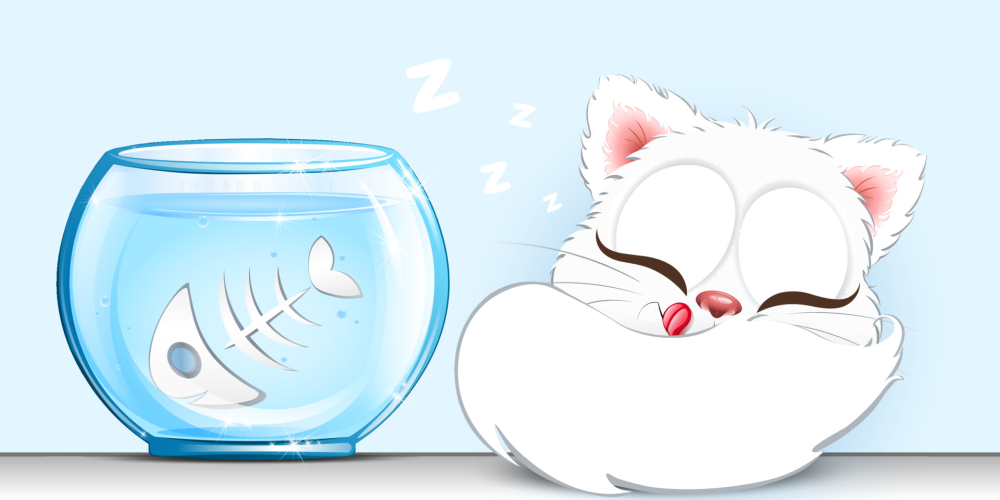
Did you ever notice a cat in repose, resting? And have you ever watched a cat crouching before a mouse–hole? In the latter case do you recall how the cat crouched in an easy, graceful attitude— no muscular contraction, no tense attitude; a beautiful picture of intense vitality in repose, but ready for instant action. Still and motionless remains the animal; to all appearances it might be asleep or dead. But wait till it moves! Then like a flash of lightning it darts forward. The repose of the waiting cat, although absolutely devoid of movement or tense muscles, is a very live repose— a very different thing from laziness
. And note the entire absence of quivering muscles; of nerves on edge
; of beaded perspiration. The machinery of action is not strained with waiting. There is no waste motion or tension; all is in readiness, and when the moment of action comes the prana is hurled into fresh muscles and untired nerves and the action follows the thought like the spark from the electric machine.
The Hatha Yogis do well to use the cat family as an illustration of grace, vitality and repose.
In fact, there can be no great power of quick and effective action unless the ability to relax is also there. People who fidget, fret, and fume, and stamp
up and down, are not the people who do the best work; they wear themselves out before the hour for action arrives.
The man who may be depended upon is the one who possesses calmness, the ability to relax, repose. But let not the fidgety
person despair; relaxation and repose may be cultivated and acquired just as may be other desirable gifts
.
In our next chapter we will give a few simple instructions to those wishing to acquire a working knowledge of the Science of Relaxation.
Chapters
| Theory Chapter 1: What is Hatha Yoga?fakir raja karma gnana gnani jnana jnani chapter 1 |
| Theory Chapter 2: The Yogis' Regard For The Physical Bodyego conscientiously exercise western |
| Theory Chapter 3: The Work Of The Divine Architect |
| Theory Chapter 4: Our Friend, The Vital Forceprana chi |
| Theory Chapter 5: The Laboratory Of The Bodyteeth tongue saliva glands digestion stomach small intestine Pyloric Valve Pyloric Orifice gastric juice pesin fermentation yeast putrefy dyspepsia villi bile liver pancreatic juice Mastication insalivation deglutition intestinal digestion absorption circulation assimilation chyme Peptone Chyle heart glycogen kidneys urea waste ureters bladder pelvis urine headache poison |
| Theory Chapter 6: The Life Fluidblood nutrition digestion circulation heart capillaries intestinal villi veins lungs lymphatic system chyle brain impurities |
| Theory Chapter 7: The Crematory Of The Systemlungs thorax respiratory heart blood bronchi arteries breathe breathing nose pharynx larynx windpipe trachea chest diaphragm oxygen hemoglobin bronchial tubes |
| Theory Chapter 8: Nourishmentnourishment food |
| Theory Chapter 9: Hunger vs. Appetitenarcotics drugs tobacco wealthy people who were shipwrecked craving starvation alcohol whiskey |
| Theory Chapter 10: The Yogi Theory And Practice Of Prana Absorption From FoodHorace Fletcher American writer magnetism magnetic food eating |
| Theory Chapter 11: About Food |
| Theory Chapter 12: The Irrigation Of The Bodywater sweat perspiration skin kidneys lungs urine constipation colon large intestines small intestines saliva bowels bile colon prana pancreatic juice gastric juices |
| Theory Chapter 13: The Ashes Of The Systemcolon constipation small intestines appendix appendicitis Sigmoid Flexure fecal matter dyspepsia biliousness liver troubles kidney troubles |
| Theory Chapter 14: Yogi Breathingpranayama triple breath Complete Breath |
| Theory Chapter 15: Effects Of Correct Breathingpranayama triple breath Complete Breath |
| Theory Chapter 16: Breathing Exercisespranayama cleansing breath Yogi Nerve Vitalizing Exercise Yogi Vocal Breath The Retained Breath Lung Cell Stimulation Rib Stretching Chest Expansion Walking Exercise Morning Exercise Stimulating Circulation lungs muscles ligaments air cells |
| Theory Chapter 17: Nostril Breathing vs. Mouth Breathingpranayama nose |
| Theory Chapter 18: The Little Lives Of The Bodyboils pimples cells red blood red-blood gastric juice saliva pancreatic juices bile wound healing Instinctive Mind prana |
| Theory Chapter 19: The Control Of The Involuntary Systemprana colon heart liver cold feet menstruation circulation |
| Theory Chapter 20: Pranic Energyprana esoteric exoteric Nervous System Cerebro Spinal System Sympathetic System Medulla Oblongata brain mind Ganglia solar plexus Abdominal Brain manipua third chakra 3rd chakra |
| Theory Chapter 21: Pranic ExercisesPrana Generating Changing The Circulation Recharging Brain Stimulation Yogi Grand Psychic Breath heart Rhythmic Breathing grand breath |
| Theory Chapter 22: The Science Of Relaxationprana muscles instinctive mind cat panther |
| Theory Chapter 23: Rules For Relaxationprana muscles nerves anger worry anxiety stress fear smile smiling calmness stretching poses postures asanas healing health |
| Theory Chapter 24: The Use Of Physical Exerciseprana mental |
| Theory Chapter 25: The Use Of Physical Exercisefat muscles stomach shoulders arms legs back thighs abdomen |
| Theory Chapter 26: The Yogi Bathperspiration japanese pores skin waste sweat kidneys bacteria germs foot bath sleep prana Exercise To Reduce The Abdomen flat stomach standing walking posture slouching |
| Theory Chapter 27: The Solar Energyprana sunbath sun bath planets vitality morning sun |
| Theory Chapter 28: Fresh Airprana lungs kidneys colon bowels skin sleep |
| Theory Chapter 29: Sleepfresh air relaxation |
| Theory Chapter 30: Regenerationprana sex solar plexus kama sutra |
| Theory Chapter 31: The Mental Attitudecheerful happy happiness gloom worry fear hate jealousy anger depressing depression anxiety poison water mothers milk negative thinking positive thinking grief diabetes cancer grief jaundice insanity idiocy paralysis jaundice premature greyness baldness decay of the teeth uterine troubles erysipelas eczema impetigo contagious diseases bright cheerful happy calmness peace strength absolute fearlessness stop and smell the roses |
| Theory Chapter 32: Lead By The Spiritinstinct intuition |
| Hatha Yoga Todayvaccines health geo-engineering climate change holistic health natural health wifi emf celtic salt circadian rhythm |
Send Message
The Real Yoga
website is designed to be a self–study website. But, feel free
to send us a message — but do make sure your email is correct.
Respecting Your Privacy
No spying. No cookies. No Google. No advertising. No tracking. No joking — well, maybe a few jokes.
Say yes to 100% free! Two thumbs up!










IndexIntroPosesChairSimple 1Simple 2Simple 3Simple 4Simple 5Simple 6Simple 7Simple 8BasicLesson #1Lesson #2Lesson #3Lesson #4Lesson #5Theory 1Theory 2Theory 3Theory 4Theory 5Theory 6Theory 7Theory 8Theory 9Theory 10Theory 11Theory 12Theory 13Theory 14Theory 15Theory 16Theory 17Theory 18Theory 19Theory 20Theory 21Theory 22Theory 23Theory 24Theory 25Theory 26Theory 27Theory 28Theory 29Theory 30Theory 31Theory 32Theory 33Ever Conscious